

Published :
Updated :
 For all latest news, follow The Financial Express Google News channel.
For schoolchildren, January means the joy of holding new books, the sweet smell of fresh notebooks, and the quiet excitement of a new classroom. The first month brings joy to the lives of children and teenagers. For many of them, getting a book in hand at this time means their duty is to memorise chapters, complete the lessons, and prepare for exams.
But have you ever thought that, beyond textbooks, there is a world for children filled with imagination, adventure, wonder, and emotion? Yet because our education system is exam-focused mainly, many children don't have the opportunity to enter that vast world of imagination through books.
Reading books is not merely a way to improve language skills; it also helps deepen thought, imagination, empathy, and self-reliance. This is not possible by following a specific syllabus.
Albert Einstein once said, "If you want your children to be intelligent, read them fairy tales. If you want them to be more intelligent, read them more fairy tales." If children can make friends with books at an early age, they are more likely to become lifelong companions.
The habit of reading works best when it is fun. If reading is imposed as extra work or a moral lesson, children will naturally avoid it. So reading should start with joy.
The family plays the first and most crucial role in developing a child's reading habit. When books are available at home, and adults read regularly, children are naturally drawn to books. Even if the parents themselves are not well educated, they can still regularly take their children to the library or a book fair.
If a specific time is set aside every day as 'silent reading time', reading books can gradually become a daily habit. It's also essential to give children the freedom to choose their own books.
When they pick up books of their own choice, the habit of reading grows naturally. But the most crucial question is, what kind of books should I start with? The reality is that not all children like the same types of books.
Children aged between 10 and 12
According to child psychology, imagination and curiosity develop rapidly at this age. Solving mysteries through stories or relating personal experiences with fictional characters helps children remain attentive and engaged.
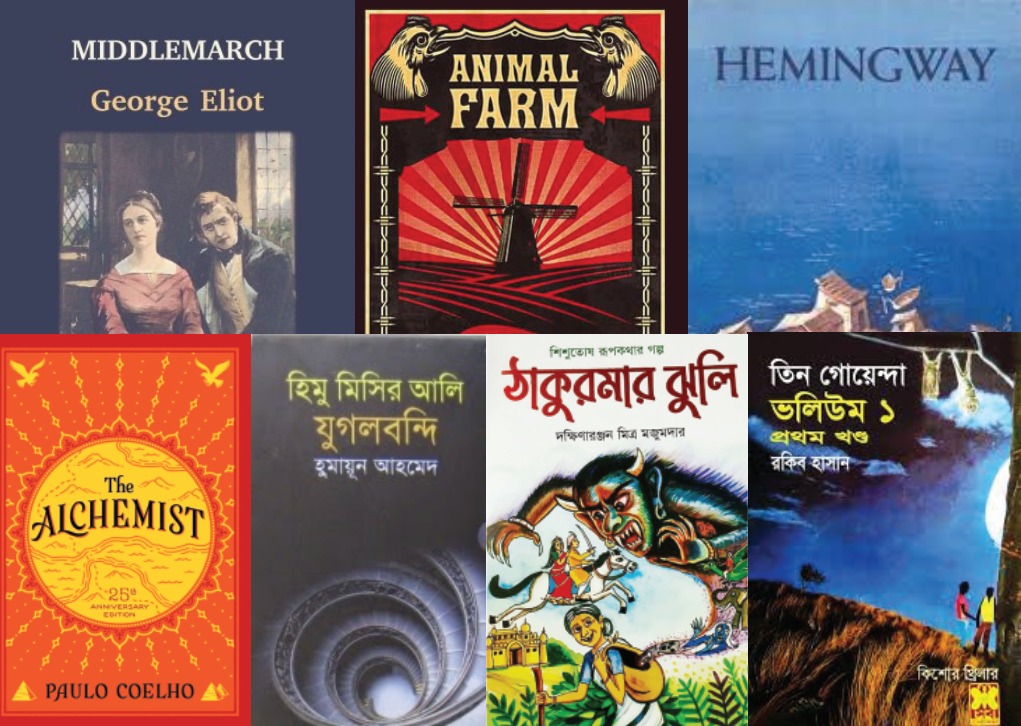
Fairy tales, fantasy, comics, light detective stories, adventure fiction, humour-based books, and folktales can significantly increase children's interest in reading at this stage. Many children enjoy classics such as Thakurmar Jhuli or humorous narratives like Gopal Bhar Stories and Tenida Stories.
Rakib Hasan's adventurous Tin Goyenda series is also popular among this age group. In addition, Muhammad Zafar Iqbal's science-based stories and simple science fiction often spark curiosity and encourage logical thinking.
Between the ages of 13 and 15
Reading becomes more personal at this stage, as teenagers begin to explore their emotions and identities. Along with young adult fiction, science fiction, and mystery, novels centred on coming-of-age experiences, friendships, and ethical dilemmas expand teenagers' imaginative and emotional worlds.
Many adolescents are drawn to Humayun Ahmed's teenage novels, including the Himu and Misir Ali series, as well as Muhammad Zafar Iqbal's science fiction.
Popular world literature, such as the Harry Potter series or Rick Riordan's Percy Jackson books, also helps them think about friendship, courage, loss, and life choices.
Ages between 16 and 18
Readers taste mature further between the ages of 16 and 18. At this stage, many readers develop an interest in self-improvement books, biographies, simplified texts on society and science, contemporary young adult literature, historical narratives, inspirational non-fiction, and poetry.
They may enjoy selected writing by Selina Hossain, the memoir Ekattorer Dinguli by Jahanara Imam, or adapted stories by Akhtaruzzaman Elias, as well as translated books such as Ernest Hemingway's The Old Man and the Sea, George Orwell's Animal Farm, George Eliot's Middlemarch, or Paulo Coelho's The Alchemist.
When choosing books for children, it is essential to ensure the language is simple, the story's pace is engaging, and the content is age-appropriate.
Ultimately, developing a reading habit in children cannot be done overnight. It requires patience, time, and concerted effort.
sumaiyariva1120@gmail.com