

Printing presses suffer loss across districts
Need for posters further fell due to campaigning in digital space
Published :
Updated :
 For all latest news, follow The Financial Express Google News channel.
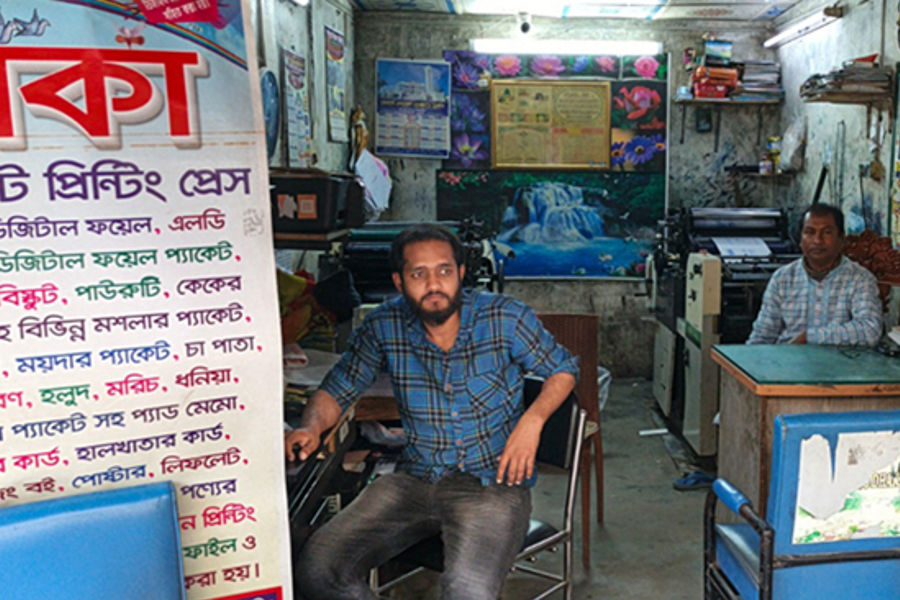
Printing presses across the country have been facing a huge loss on seasonal income due to the ban on posters and restrictions on other campaigning materials ahead of election.
The 13th National Parliamentary Election is set to be held on February 12. According to its code of conduct, candidates are allowed to use black-and-white banners, leaflets, handbills and festoons for campaigning. However, these must be within the prescribed size limits.
Our correspondent from Rajshahi writes, although the ban brought environmental relief, it will cost the printing industry in the district Tk 100 million.
The decision to ban election posters has significantly reshaped campaign practices across the country, including in Rajshahi.
Once crowded with black-and-white posters on walls, alleys and electric poles, the city now presents a noticeably cleaner look. Candidates are instead relying on a limited number of environment-friendly banners, festoons and leaflets for campaigning.
While many residents feel the absence of posters has taken away some of the festive election atmosphere, environmentalists have welcomed the move, citing reduced visual pollution and improved urban aesthetics.
However, the environmental gain has come at a heavy economic cost for Rajshahi's printing industry, traditionally one of the biggest beneficiaries of election seasons.
According to press industry sources, Rajshahi has around 60 to 70 printing presses. Had poster printing been allowed, the parliamentary election alone could have generated business worth Tk 80-100 million. In previous elections-from union parishad to mayoral and parliamentary polls-poster and paper-based campaign materials accounted for transactions worth millions of taka.
Shahjahan Ali, proprietor of Dhaka Press at Horcas Market, said election periods usually bring peak workloads for printers. This time, there are virtually no orders. "We still have to bear the costs of paper, ink, electricity and machine maintenance, but our income has stopped. We are facing heavy losses."
Rafiqul Islam, owner of Sagar Offset Printing Press, echoed similar concerns, noting that posters remain popular in rural areas despite the rise of digital campaigning. That demand has completely disappeared due to the ban. I run my press on bank loans, and now I am unsure how I will repay them.
Shahin Ali, proprietor of New Shahin Press, said election seasons previously meant round-the-clock operations. There were times when we ran machines all night. Now we only receive small leaflet orders that are finished within an hour. The rest of the day, the machines remain idle.
Alauddin, a long-time worker in the city's Shashtitala area, said election periods once meant overtime work and extra income. Now there is no work. The owner says he may not be able to pay salaries. I am worried about how I will support my family.
Our correspondent from Khulna notes, the ban has triggered deep frustration among printing business owners and workers in Khulna Bagerhat and Satkhira, who say the move has caused losses worth millions of taka and left the sector in severe uncertainty.
According to Abed Hossen Shohag, general secretary of the Khulna District Printing Owners' Association, there are around 110 printing presses under the association, of which 10-12 presses usually depend heavily on election-related poster, leaflet and handbill printing.
"National elections are the biggest season for us. This is the time when we do the highest volume of poster and banner work. But the EC's decision to ban posters has brought extreme disappointment to those involved in the printing industry," he said. He claimed that printing press owners in Khulna have incurred losses amounting to millions of taka due to the restriction.
Khalekuzzaman Babu, joint secretary of the association, said press owners wait five years for a parliamentary election. "We rely heavily on the business generated during elections. This decision has put us in serious financial trouble," he added.
Sakhawat Hossain, owner of Padma Printing Press, said they were initially excited after the election schedule was announced. "But the ban on posters has financially affected those of us connected with the printing sector. Some candidates are printing limited handbills, but that is far from sufficient," he said.
Worker Ruhul Amin said he had hoped to earn extra income through overtime during the election season. "That opportunity is gone. Not only press workers, but many unemployed youths who used to earn Tk 400-500 per day pasting posters have also lost a source of income," he said.
Azharul Islam Azu, owner of Smriti Art Press, said the printing business had already been slow. "We expected some relief from election work, but the ban has broken that hope," he said.
Our Sylhet correspondent reports, the owners of printing presses in Sylhet were disheartened as they suffered huge loss due to the ban and have been deprived of their long desired seasonal income. Many of them even apprehended that they would face a similar situation if the decision is applied to elections for local bodies in near future.
During recent visits to some printing presses in Sylhet city's Barutkhana and municipal markets, this correspondent saw rows of machines and stacks of paper lying idle.
In the previous elections years ago, workers had to work 15-16 hours a day just to keep up with the demand. This year, most of their time is spent waiting.
Referring to previous polls, Azmal Ali, owner of a mini press in the city, said printing work would surge immediately after election symbols were allotted. It was common for small and large presses to get orders for hundreds of thousands of posters. Many owners had to even hire extra workers to ensure timely delivery of orders. But now, things are completely different.
Another press owner apprehended that many presses will not be able to survive if the EC decision remains the same in the coming polls. He said this is the first national election without posters.
Around a hundred printing presses in the district are reportedly going through the same crisis. Workers who usually depended on overtime now have no work at all.
anaetru@gmail.com
forsylhet@gmail.com
gmrafiq67@gmail.com