

Published :
Updated :
 For all latest news, follow The Financial Express Google News channel.
Is Bangladesh a nation of forgers? When such denigration comes from none other than the head of the government, one who is a recipient of the highest award on offer in the world, people cannot but look askance. In fact, any generalised perception of any race, people or nation is faulty. But this kind of generalisation is common and at times taken to its extreme. For example, the discriminatory view widely entertained by people of one district against another is so pervasive that they would avoid marriage between their sons and daughters from each other's localities. Had all men were dacoits from a particular district, how would it look like? This kind of narrow and biased perception of a nation is most dangerous.
The colonial powers often tried to portray the Bangalees as a mean, effeminate, servile and sycophantic race. Lord Babington Macaulay, a key British official in 1830s India held the educated Baboos in utter contempt for their refusal to engage in works demanding physical effort. Because he had close contact with this section of people in India, he had reason to be aghast at the lackeyism of these people. Hardly did he observe how the common people put serious effort and labour in cultivation of crops and other occupation for survival. No, the ordinary folks were never deceitful and dishonest and they are still so with the rare exception. On that count, they are like any other human race on this planet.
The fact is that village people not exposed to the trickeries of urban life are simple, laborious and hardy. Maybe, the number and percentage of fraudsters and tricksters is on the rise compared to Macaulay's time because the educated urbanites have shown them the way of fraudulence. Still the average village people are not so-called smart compared with their urban peers. Their awkwardness is quite obvious when they confront a tricky or complex situation. Yes, the first generation of urbanites have to learn from their mistakes. They may even be complete misfits in an urban landscape and even lose their trust when people who act as go-between the two locations deceive or defraud them. This has been happening particularly in case of recruitment of workers with jobs abroad in exchange for money.
If the villagers take time to get habituated with the way of life in urban centres, the ones who have been living in such locations for generation do not feel unease with the development on account of addition of more and more facilities or infrastructure. There is one unmistakeable sign that cosmopolitanism has failed to take root because of the rapid transition that has taken place at a faster pace over the past couple of decades. It is more so because of the invention of gadgets that were three or four decades ago beyond imagination.
However, the majority of people ---the older generation in particular---have failed to cope with the rapid technological transition and infrastructure development. In a world where artificial intelligence (AI) is taking over from human learning process, cosmopolitan culture is unlikely to develop systematically and smoothly.
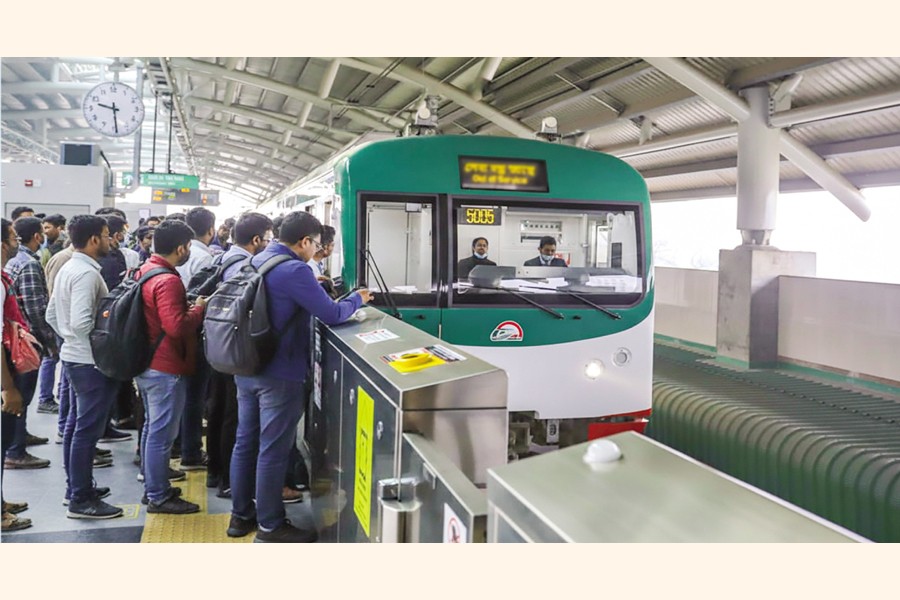
This is why the passengers at metro rail station behave queerly. Many of them simply do not know that they cannot cross the yellow line and do not have to crane their necks to see if the train is arriving at the station. The electronic boards overhead show the minutes remaining before the arrival of a train and the lights flash on both ends when the arrival is a matter of seconds. Even people stand haphazardly when on board the train. Fortunately, they are as much accommodative as possible of the new arrivals of passengers. It is because they feel grateful to avail of a transportation system that takes them to their destinations on time.
The accommodative mentality is a sign of the fruition of cosmopolitan culture. Mass transportation without hassle, when everyone is busy and responds to the constraints collectively without blaming each other for minor faults, helps cosmopolitanism take its root. In a megacity where thousands of people disembark at a time without collision and the fellow passengers are treated understandably and even respectfully, particularly when girls and women share the same compartment, cosmopolitan space widens to some extent. However, the Dhakaites have a long way to go before they set examples of understanding of each other in a situation of heavy rush. Facilities like the metro will have to expand all across the city for people to learn, through trial and error, the essence of cosmopolitanism.